Amir Ghasemian
UCLA
Los Angeles, CA 90095
Computational Social Science Lab
University of Pennsylvania
Philadelphia, PA 19104
Email me
I am an Assistant Researcher and a cofounder of the OASIS Lab at the University of California, Los Angeles, and an affiliated Research Scientist at the University of Pennsylvania's Computational Social Science Lab, working with Duncan Watts. Previously, I was a CIFellow 2020 in HNL at Yale University, working with Nicholas Christakis and Edoardo Airoldi. I received my PhD degree in Computer Science from University of Colorado Boulder under the supervision of Aaron Clauset.
My research interests lie in network science, statistical inference, causal inference, information theory, machine learning, data mining, and signal processing.
My Research
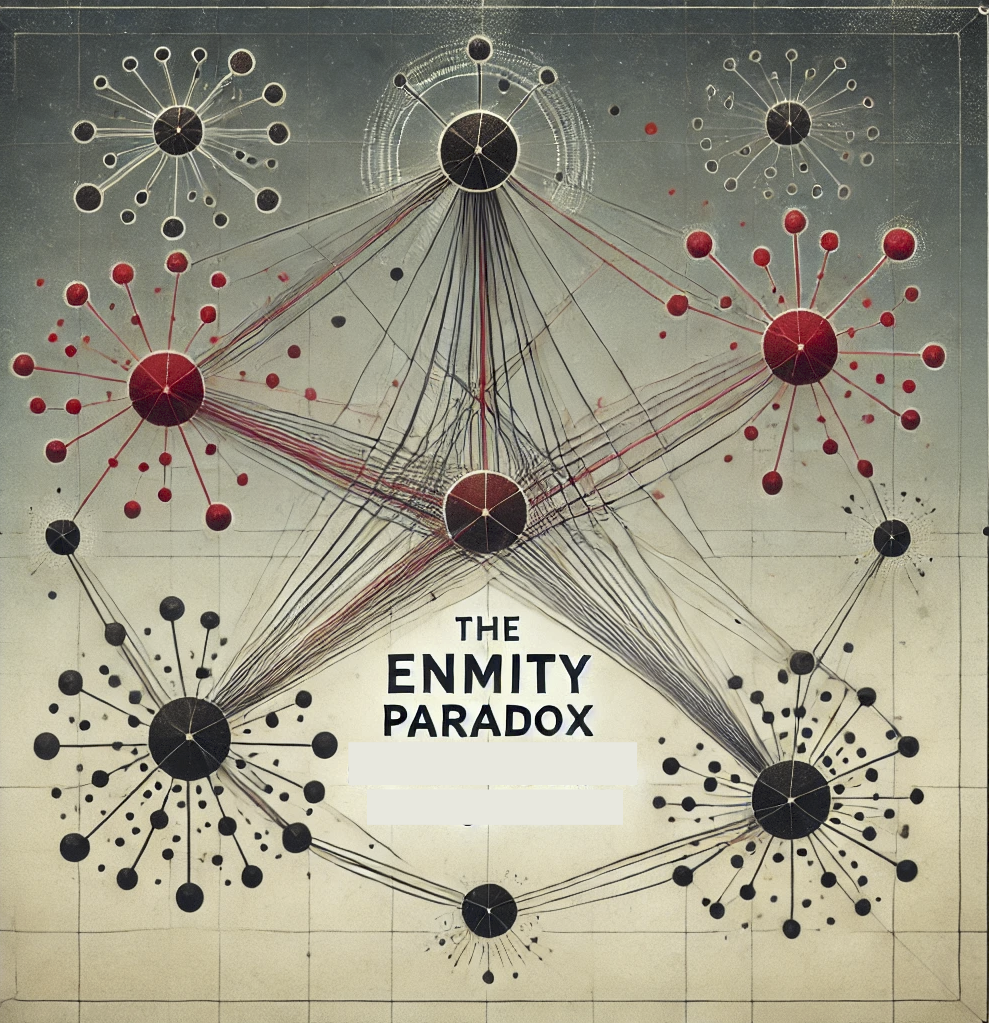
My research develops and applies computational methods to understand, predict, and improve complex networked systems—while also mapping the fundamental limits of inference: when data contains enough signal and when algorithms can efficiently recover it. I draw on tools from network science, machine learning, causal inference, statistical physics, and information theory, organized around three complementary aims: Empirical Analysis of Computational Methods (EACM)—systematically evaluating how methods succeed or fail across different data, algorithms, and evaluation metrics to build a coherent map of when results generalize (e.g., evaluating community detection algorithms, optimal link prediction, temporal link prediction); Theoretical Analysis of Inference Limits (TAIL)—using probabilistic models and phase-transition analyses to determine when observations contain enough information for recovery and whether efficient algorithms can achieve it (e.g., detectability thresholds in dynamic networks, DOA estimation in CDMA systems); and Real-world Applications of Inference and Learning (RAIL)—translating principled methods into decision-relevant insights for domains like social science, public health, and digital platforms (e.g., the enmity paradox, antagonistic ties in village networks, YouTube content consumption, recommender system auditing). My methodological contributions span community detection, link prediction, and causal inference in network experiments. Application domains include social science (antagonistic ties and cooperation in village networks), digital media (YouTube news ecosystems, recommender system auditing, and platform integrity), public health (network interventions and health behaviors), and human-AI interaction (LLM-assisted systems and their societal impacts). Throughout, I value statistical physics for its unique perspective on phase transitions in making conjectures, probability theory for proving these conjectures, statistics and information theory for modeling and analyzing problems, and linear algebra and signal processing for understanding the geometry of available data.
News
| Apr 8, 2026 | Our paper, “Seeking Help, Facing Harm: Auditing TikTok’s Mental Health Recommendations,” accepted at ICWSM 2026. |
|---|---|
| May 15, 2024 | Our paper, “The Structure and Function of Antagonistic Ties in Village Social Networks,” has been accepted for publication in PNAS. |
| Jan 18, 2024 | Our paper, “Sequential Stacking Link Prediction Algorithms for Temporal Networks,” has been accepted for publication in Nature Communications. |
| Jan 1, 2024 | I joined Computational Social Science Lab at the University of Pennsylvania as a research scientist. |
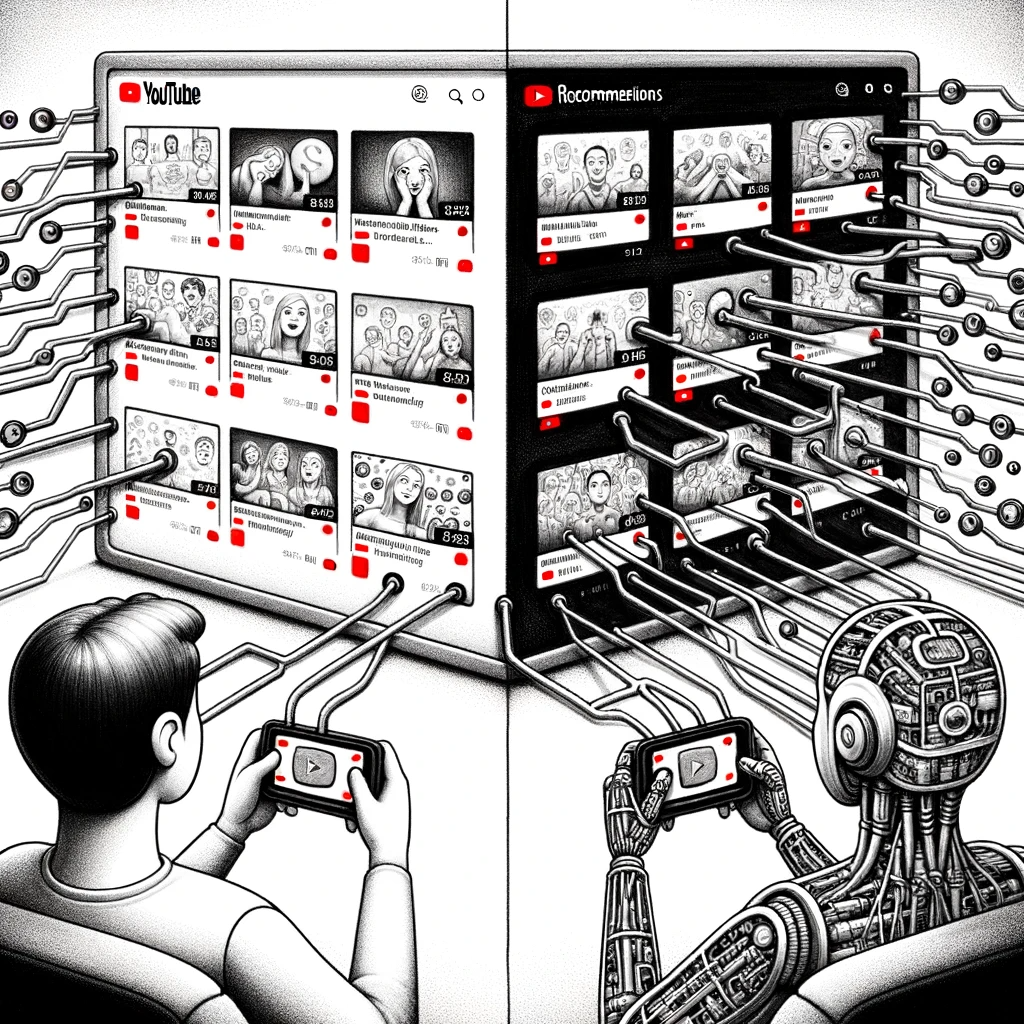
| Dec 14, 2023 | Our paper, “Causally estimating the effect of YouTube’s recommender system using counterfactual bots,” has been accepted for publication in PNAS. |